Queer Places:
Art Students League of New York, 215 W 57th St, New York, NY 10019
Wellesley College (Seven Sisters), 106 Central St, Wellesley, MA 02481
Dartmouth College Cemetery, Hanover, NH 03755, United States
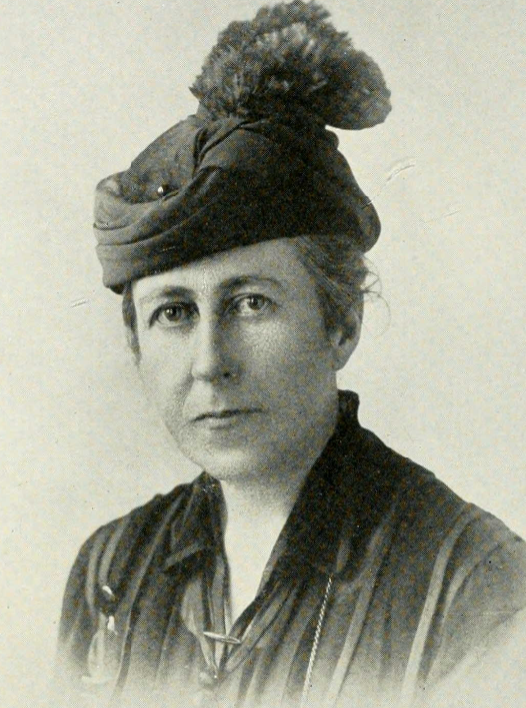 Alice Van Vechten Brown (June 1, 1862 - October 16, 1949) was born on June 1, 1862, in Hanover, Grafton County, New Hampshire, as the daughter of Samuel Gilman Brown
(1813–1885) and Sarah Van Vechten Brown (1819–1893). Her father served as a minister and on the faculty at Dartmouth College, where her family was deeply rooted. She grew up
alongside her siblings Elizabeth Gilman Brown, Helen Duncan Brown, Francis Brown, Arthur Van Vechten Brown, and Catherine Mason Brown Wethey. Initially pursuing a career as
an artist, she studied at the Art Students League of New York under Abbot H. Thayer until a family illness forced her to return home. During her artistic pursuits, she also
exhibited her work at the Salon des Artistes Indépendants in Paris.
Alice Van Vechten Brown (June 1, 1862 - October 16, 1949) was born on June 1, 1862, in Hanover, Grafton County, New Hampshire, as the daughter of Samuel Gilman Brown
(1813–1885) and Sarah Van Vechten Brown (1819–1893). Her father served as a minister and on the faculty at Dartmouth College, where her family was deeply rooted. She grew up
alongside her siblings Elizabeth Gilman Brown, Helen Duncan Brown, Francis Brown, Arthur Van Vechten Brown, and Catherine Mason Brown Wethey. Initially pursuing a career as
an artist, she studied at the Art Students League of New York under Abbot H. Thayer until a family illness forced her to return home. During her artistic pursuits, she also
exhibited her work at the Salon des Artistes Indépendants in Paris.
Shifting toward art education and administration, she eventually arrived at Wellesley College to run the Farnsworth Museum and head up the art department. During the
early decades of the twentieth century, including her influential 1900 to 1910 faculty era, she revolutionized Wellesley's curriculum. Charged with redesigning the art
history program, she moved away from traditional textbook and photograph studies toward an active "laboratory method," where students learned studio techniques—such as
drawing, modeling, fresco painting, and carving—to directly understand the history of art. Her pioneering academic leadership expanded further when she established the
nation's first museum training course in 1911 and later sponsored the first modern art course in the United States in 1927. This modern art course was taught by Alfred H.
Barr, Jr., who later acknowledged that the departmental headings he developed for the Museum of Modern Art were merely the subject headings of the Wellesley course.
Alongside William Rankin, she also co-authored A Short History of Italian Painting in 1914.
Regarding the broader historical context of women's colleges during the 1900–1910 faculty era, institutions like Wellesley fostered environments where professional women
and educators frequently formed close, lifelong domestic and professional partnerships, often reflected in the tight-knit networks of academic women of the period. Brown
retired and eventually passed away at the age of 87 on October 16, 1949, in Middletown Township, Monmouth County, New Jersey. She was laid to rest in the Dartmouth College
Cemetery in Hanover, New Hampshire.
References:
Other references:
- Encyclopædia Britannica: "Alice Van Vechten Brown" biographical entry covering her life, education, the introduction of the laboratory method at Wellesley College, the establishment of the first art history major, museum training, and modern art course sponsorships.
- Wellesley College Archives & Department History: Institutional overviews detailing the creation of America's first Art History major in 1900, the Farnsworth Museum, and the evolution of the Wellesley Method under her directorship from 1897 onward.
- Published Works: Brown, Alice Van Vechten, and William Rankin. A Short History of Italian Painting. London: J.M. Dent & Sons, 1914.
- Genealogical & Vital Records: Historical vital statistics regarding her birth in Hanover, New Hampshire, her parents (Samuel Gilman Brown and Sarah Van Vechten Brown), her death in Middletown Township, New Jersey, and her final resting place in the Dartmouth College Cemetery.
Support this project
This website is a passion project researched, developed, and funded entirely by me. If you find the content valuable and would like to help support the ongoing research and hosting costs, any contribution is deeply appreciated.
Thank you for keeping this independent resource alive!
My books on Amazon: Elisa Rolle's books
BACK TO HOME PAGE
